PEMF Healing LLC · Health tech, founder-led
Frequency Healing: a bioelectric wellness ecosystem
After the iTorus app I started my own company, PEMF Healing LLC, and built Frequency Healing: an Ultra Advanced BioPhi bioelectric platform that turns a specialist practice into something an ordinary person can use on their phone in five minutes. I own the whole surface of it: the product strategy, the research and science index, the program library, the design system, the apps on three platforms, the marketing site, the magazine at pemfmagazine.com and the 30,000+ member community around it.
- Role
- Founder and CEO, PEMF Healing LLC. Head of Product Design and UX (research, design system, end-to-end product and marketing site).
- Timeline
- 2023 to present
- Team
- Founder, small engineering team, audio production, myself on product and UX
The problem
Classic Rife-style frequency therapy plays one static tone at a time. Cellular habituation sets in after roughly twenty minutes, so people report the same three things: slow results, no results, or progress that stalls. That is a technology problem, not a user problem, and it is the reason I did not build on Rife.
The category also had a trust and comprehension problem. Products spoke in hertz numbers and practitioner jargon, which made the first session intimidating and the second session unlikely. My job as a designer was to remove the learning curve entirely while keeping the science honest and clearly non-medical.
There is a real cost to getting this wrong. Most frequency apps on the market are scraped lists with no validation behind them, sold by people who cannot tell you where a single number came from. A user who pays for that, feels nothing for three weeks and quietly writes off the entire category is the most expensive outcome in this space, because they never come back and they tell everyone they know.
The other risk is regulatory. Wellness products that drift into medical language get pulled, refunded and reported. Anyone building here is one careless claim away from losing the store listing, and one unvalidated program away from a safety story they cannot defend. Every design decision in this platform had to survive being read by a skeptic, a lawyer and a first-time user on the same day.
- , No learning curve, the product had to work for someone with zero frequency knowledge
- , 16,000+ programs, each tested and validated, on a 1.8M+ frequency database, kept navigable rather than overwhelming
- , Every claim traceable to peer-reviewed research, with the sources published openly
- , One design system across iOS, Android and web with a very small team
- , Wellness, not medical: every claim, disclaimer and legal page had to be explicit
- , Freemium had to feel generous enough to earn a paid upgrade
Process
01
Why we did not use Rife
Rife-style therapy plays a single static tone. The body habituates to a constant signal in about twenty minutes and the effect flattens, which is exactly why so many people in this category report stalled progress. Instead of inheriting that limitation I built BioPhi: dynamic, layered, phase-locked frequency architectures that keep moving so the nervous system keeps responding. Saying plainly what we did not build turned out to be the clearest way to explain what we did.
02
16,000+ programs, tested and validated
The library is not a scraped frequency list. Every one of the 16,000+ programs was constructed against the 1.8M+ frequency database, run, listened to and validated for signal integrity, layer balance, session length and habituation resistance before it shipped. That review pass is the reason the catalog can be trusted as a whole rather than sampled at random.
03
Built on peer-reviewed science, published in the open
I built a public science index rather than asking anyone to take our word for it: PEMF and bioelectromagnetics including the four-year NASA study, neuromodulation, HRV and vagal tone, sound and entrainment, bioelectricity and biofield research, and contemplative neuroscience, each cluster linked to its primary sources. Results you can rely on start with sources you can check, and the wellness, not medical, line is stated everywhere.
04
Reframe the mental model: intent, not frequency
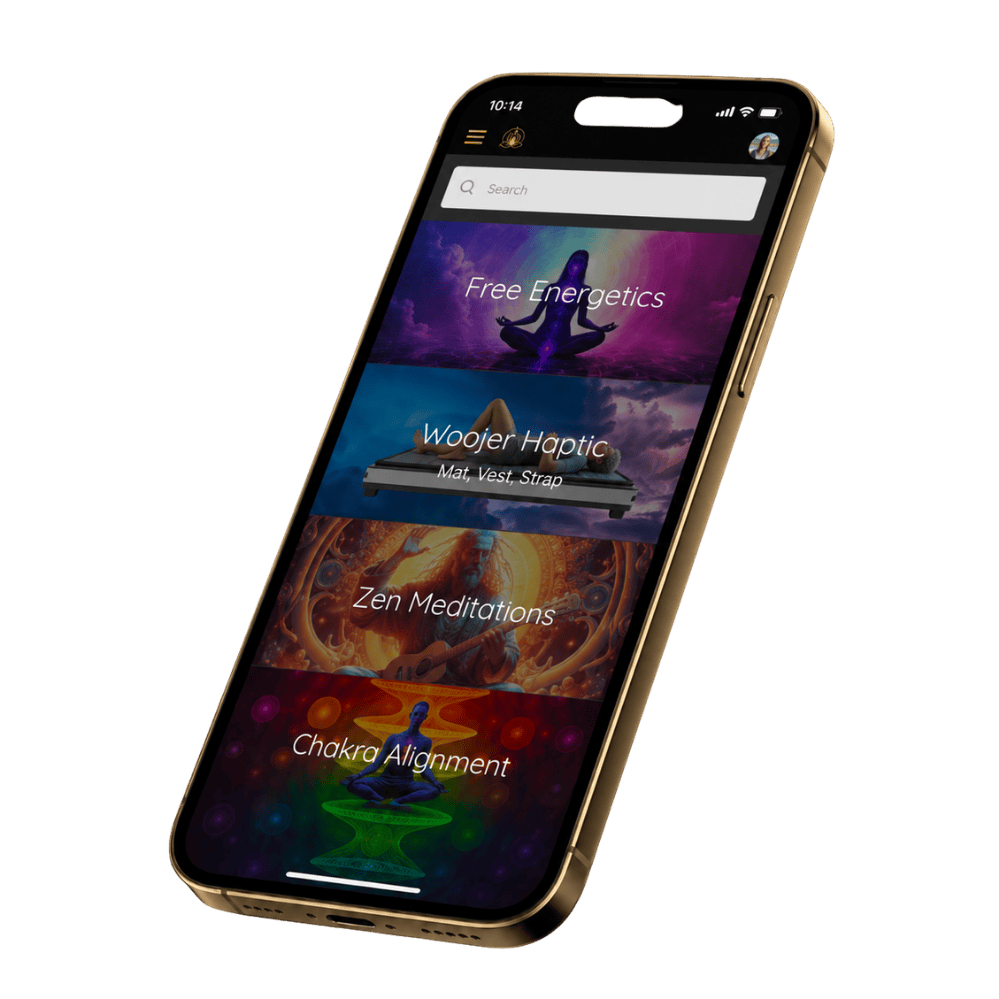
I restructured the entire library around how people describe themselves, sleep, pain, focus, recovery, mood, rather than around frequency values. Program families and categories became the primary navigation so the first tap is a feeling, not a number.
05
Personalization as the on-ramp
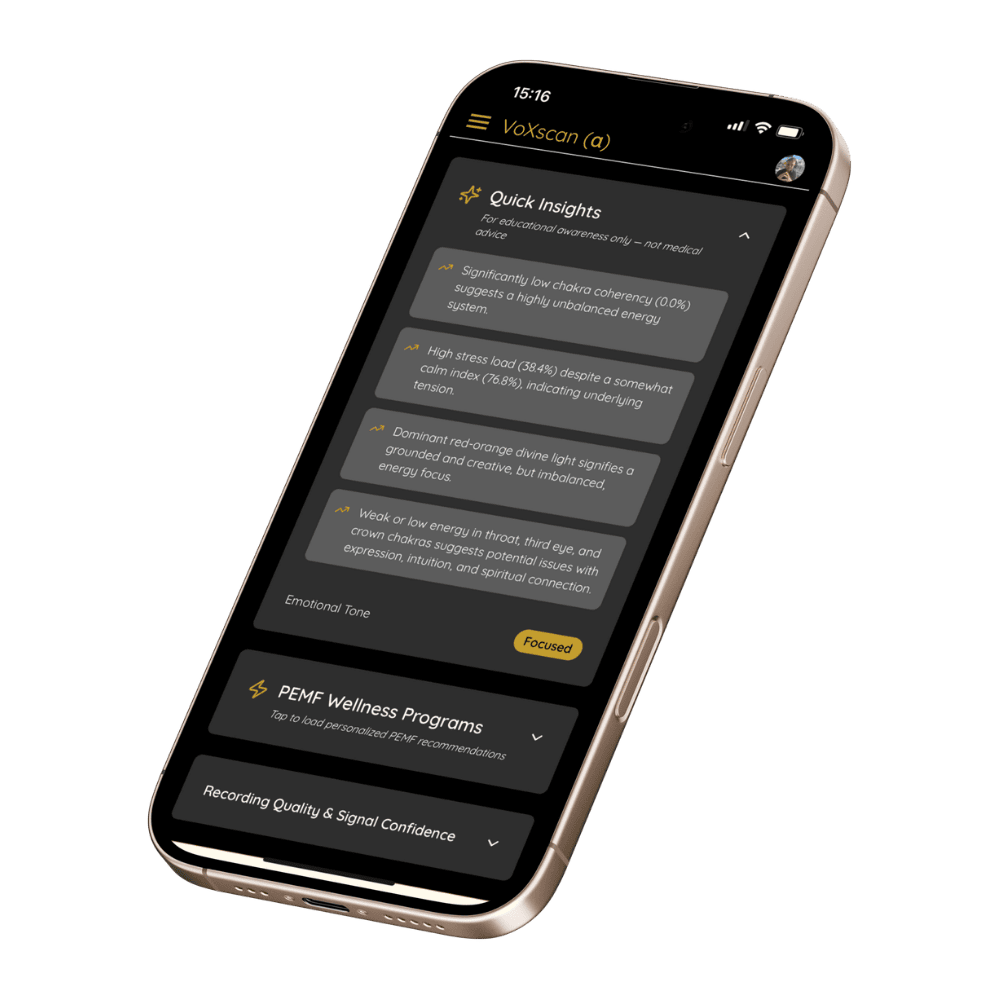
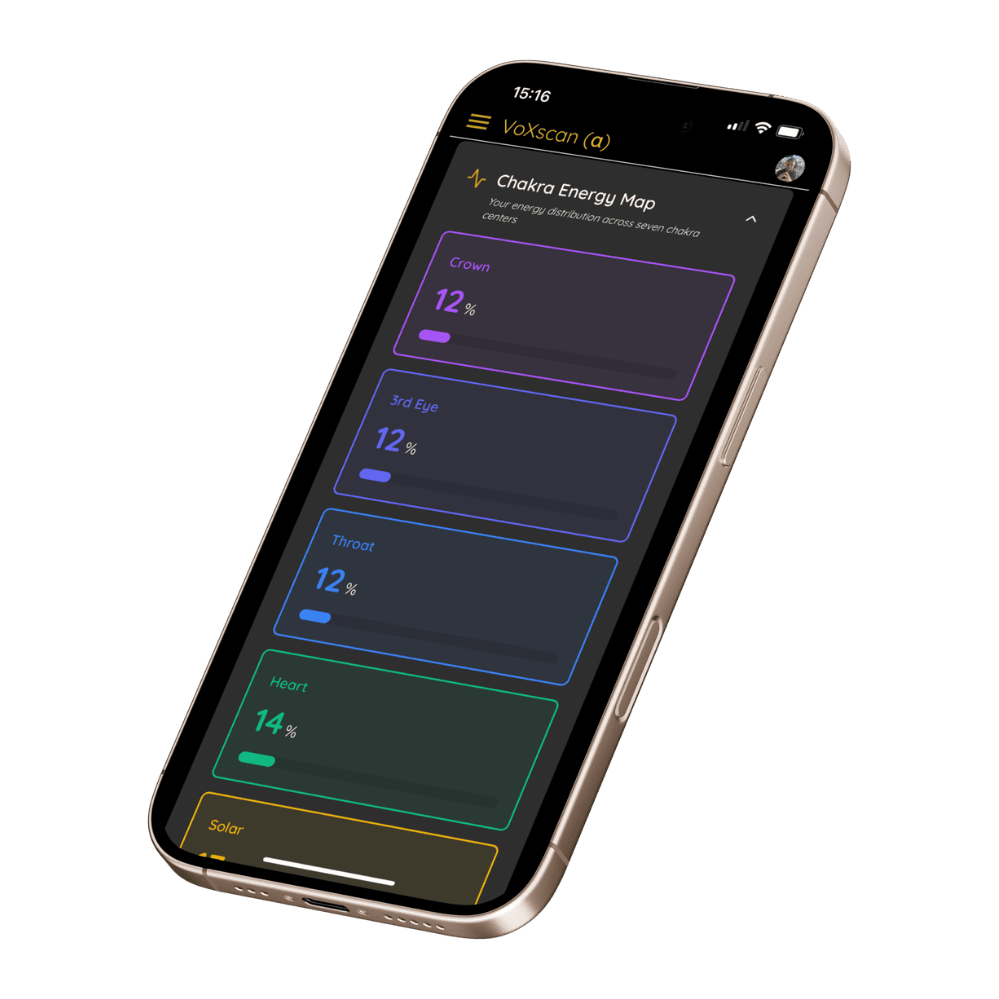
VoXscan carries new users past the blank-library problem: a 50-second voice print returns a personalized read and a matched set of programs, so the first session is chosen for you rather than searched for. It is the single highest-leverage screen in the product because it converts a 16,000-item catalog into one obvious next tap.
06
Luma Assist: the AI that speaks human, not hertz
Luma Assist takes one sentence about how you actually feel and returns a structured plan across direct, related, supportive and holistic programs, with sequencing and timing. I designed it to explain its reasoning in plain language, because in wellness an unexplained recommendation is an unused recommendation. It is the layer that makes the depth of the library usable by a first-time user.
07
Haptic Lounge: an instrument, not a media player
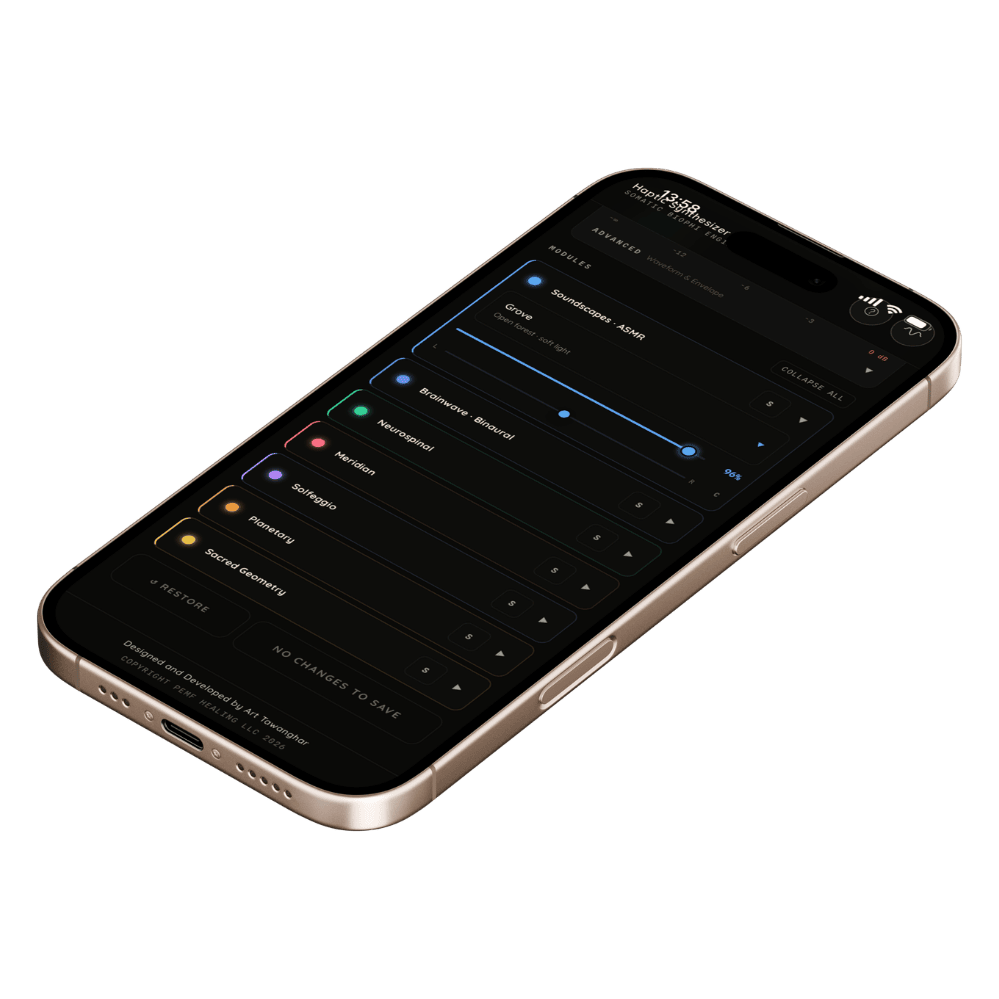
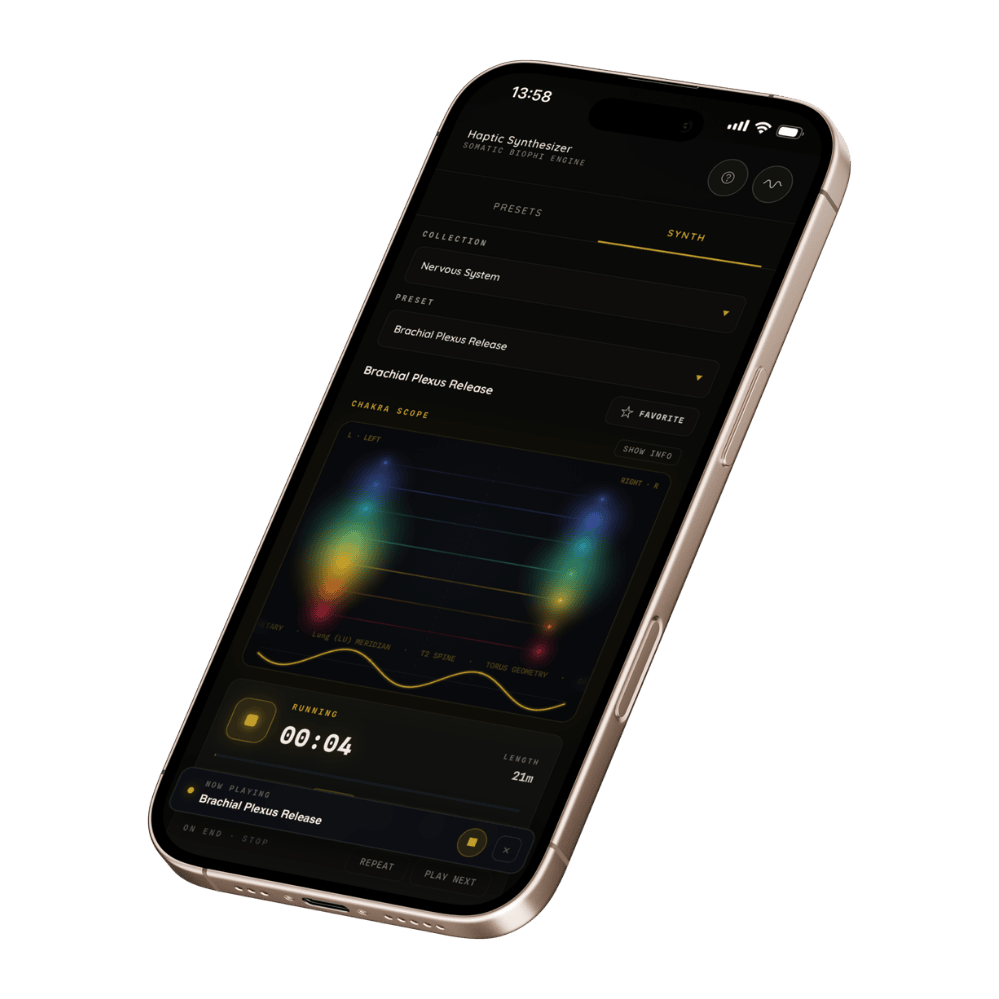
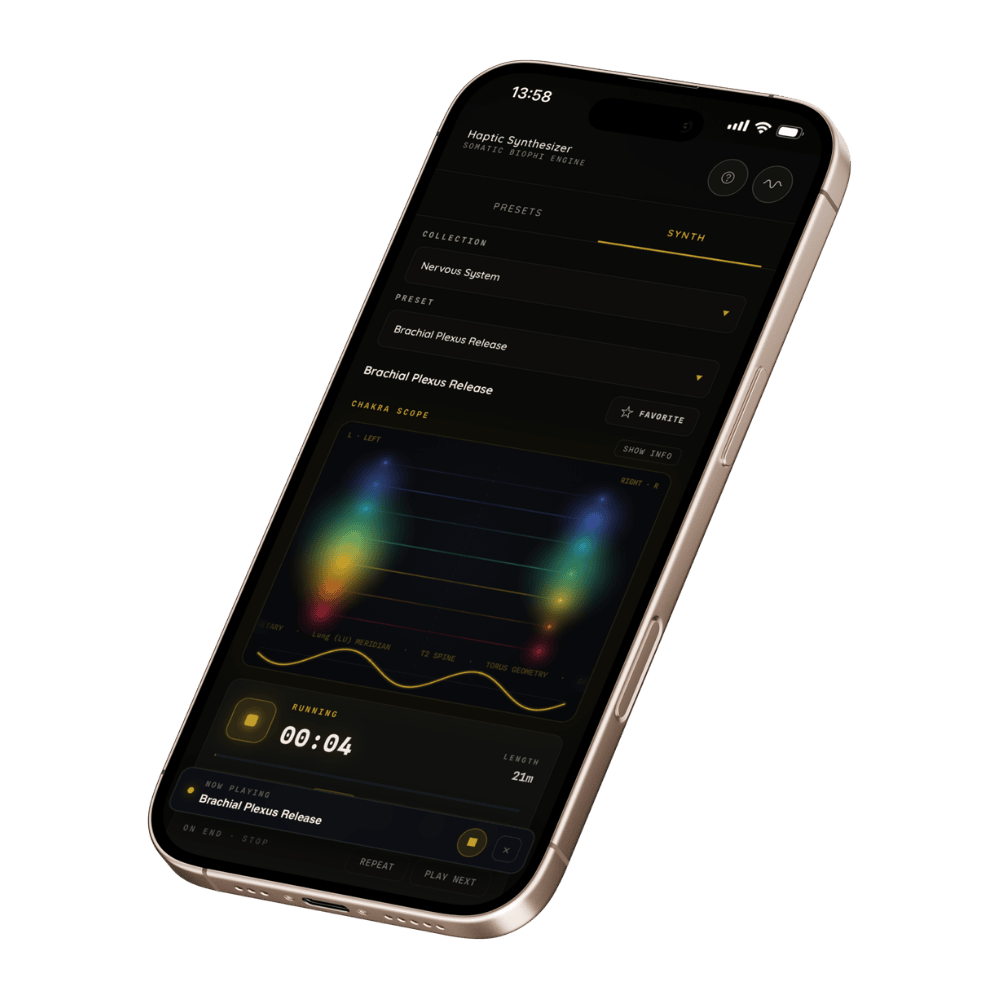
The Haptic Lounge phase-locks seven layers, brainwave entrainment, Solfeggio, Schumann, neurospinal sweeps, meridians, sacred geometry and 360 degree ASMR, into one field at 32-bit float. I designed a real-time Chakra Scope visualizer so an invisible process becomes something you can watch and trust while it runs, and gave people layer-level control without ever exposing raw hertz.
08
Deterministic tools people can verify
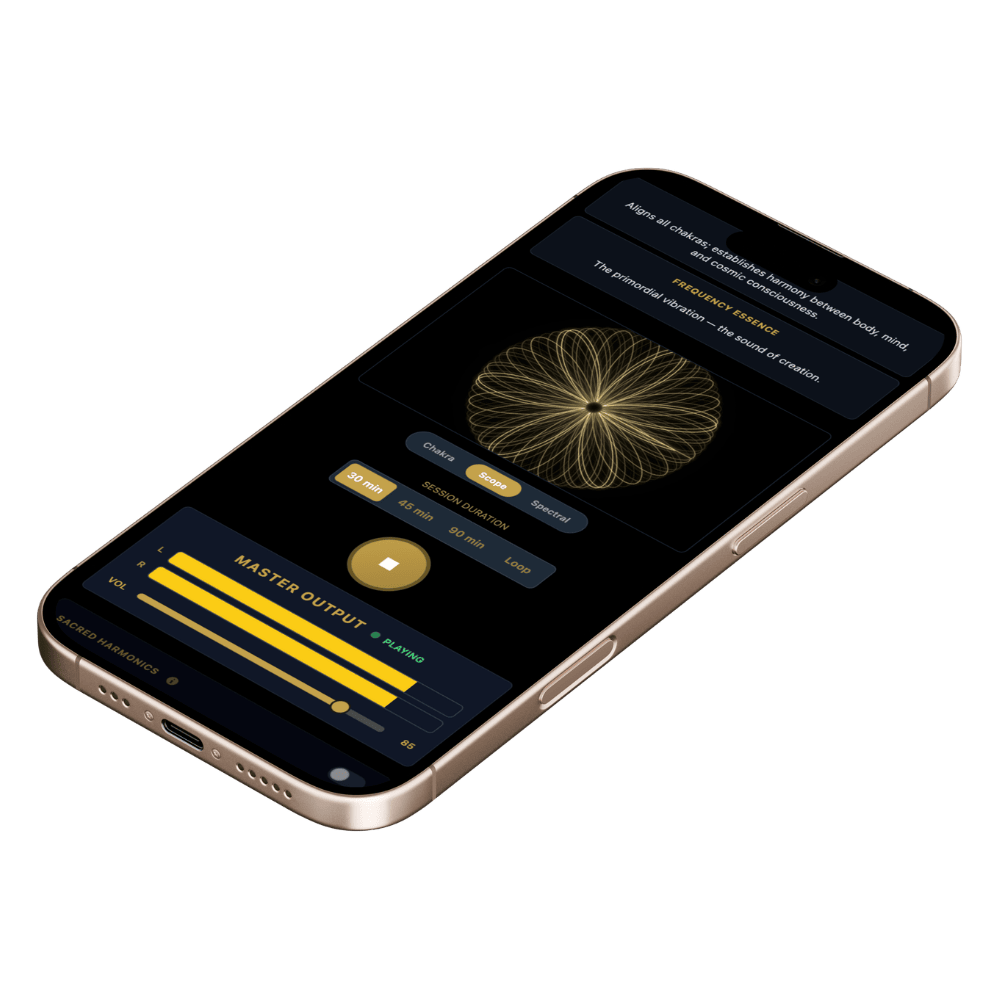
Mantra Synth turns any word or affirmation into a matched stereo pair of pure tones plus a live sacred-geometry sigil. Same input, same output, every time. Making the engine deterministic was a UX decision as much as an engineering one: repeatability is what makes the tool credible.
09
Nervous system basics for free
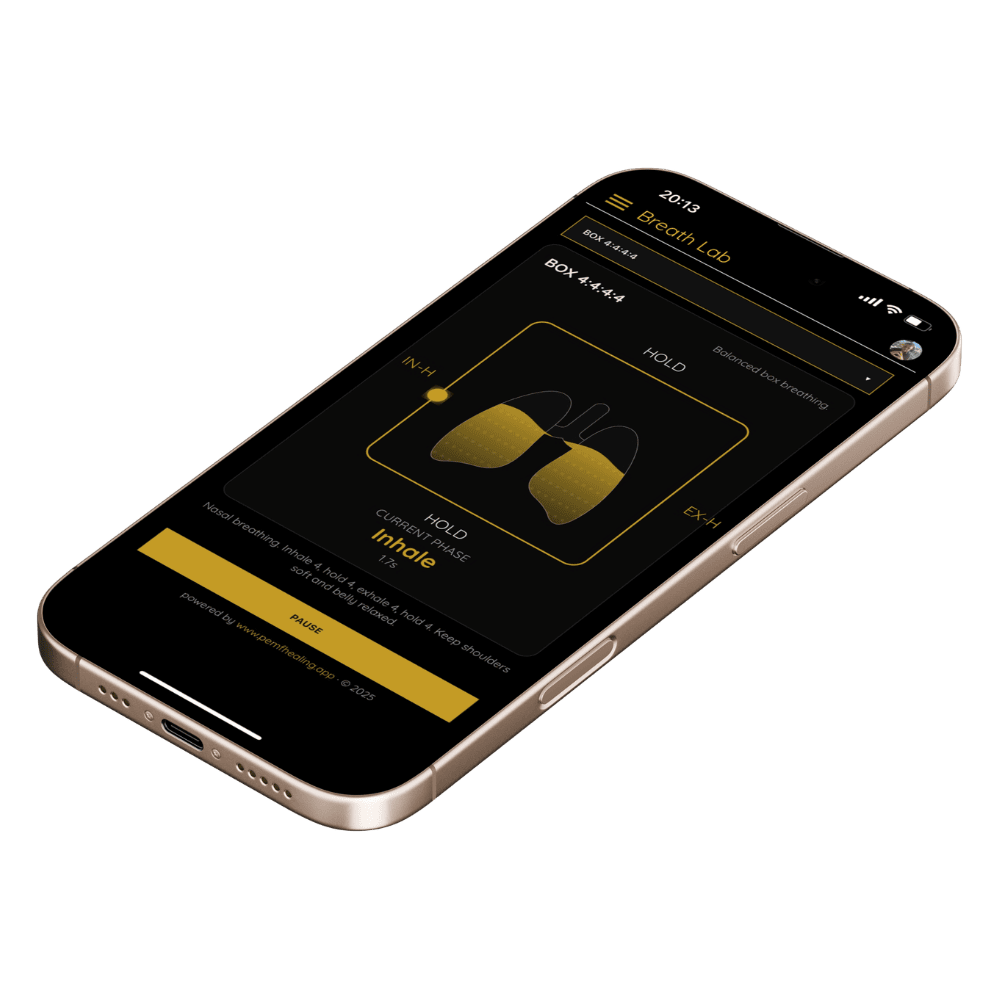
Breath Lab ships the full guided breathwork library, 4-7-8, Box, Coherent 5:5 and more, inside the free tier. It gives a first-time user a complete, satisfying session on day one without a credit card, which is the strongest argument for the paid library later.
10
Sanctura: place, ritual and retention
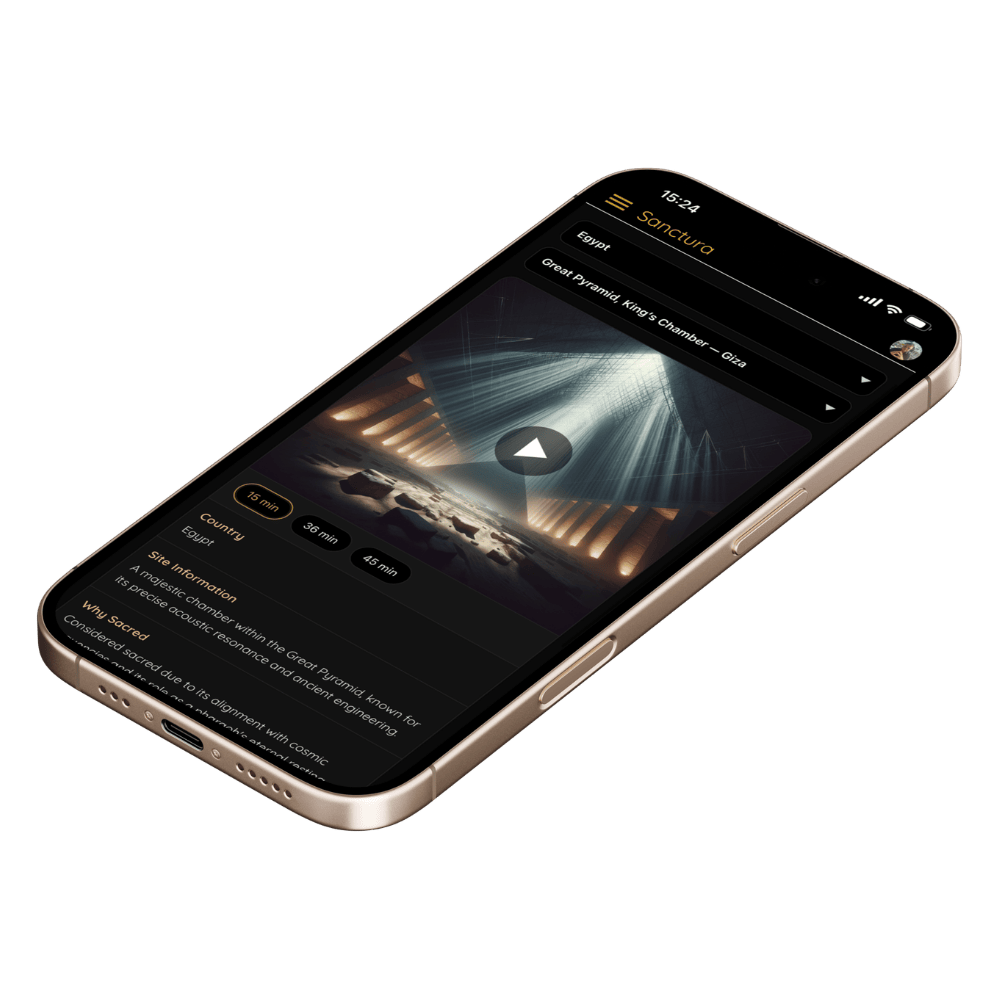
Sanctura encodes 90+ sacred-site resonance gateways, Giza, Sedona, Avalon, Uluru, into guided sessions with their own visual language and narration. Ritual and place give people a reason to come back that a raw program list never will, and it became one of the strongest retention surfaces in the app.
11
PEMF Magazine and a 30,000+ member community
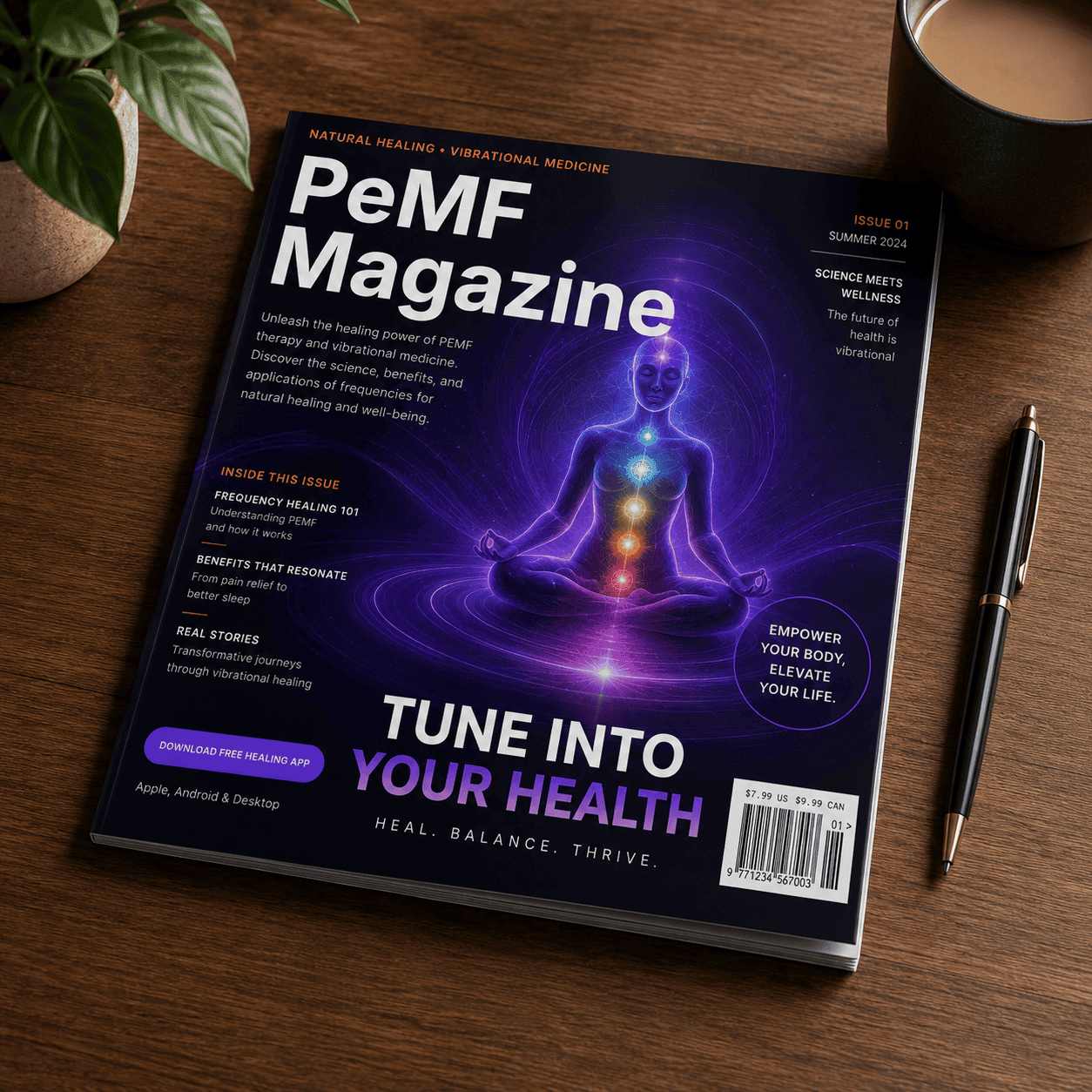
Product alone does not build a category. I launched pemfmagazine.com as an ongoing publication on frequency, PEMF and bioelectric wellness, pulled it into the app and the marketing site through the WordPress API so editorial and product share one surface, and grew a Facebook community past 30,000 members. That community is the research panel, the support channel and the acquisition engine at the same time.
12
Marketing site, SEO and the commercial layer
I designed and shipped the pemfhealing.app site myself: a page per tool, science and what-is-PEMF explainers, hardware and PEMF coils, reviews, the magazine feed, a full legal and disclaimer set, structured data and an AI-readable llms.txt, plus the freemium and subscription funnel into the App Store and Google Play.
Outcome
- 16,000+
- BioPhi programs tested and validated on a 1.8M+ frequency database
- 30,000+
- member Facebook community built around the practice
- 97%
- stated VoXscan voice-print accuracy driving personalized plans
- 3
- platforms, iOS, Android and web, plus pemfmagazine.com
What I'd do differently
I would have built the freemium tier before the full library. The free experience turned out to be the strongest acquisition and comprehension tool we have, and it arrived after the paid catalog rather than before it.
Visit the live product